nilesafarisandtours.com

welcome to ngorongoro national park

NGORONGORO CRATER & CONSERVATION AREA

The Ngorongoro crater is the largest unbroken, inactive and unfilled caldera in the world. Some maintain that before it erupted, it would have been higher than Mt Kilimanjaro, the highest peak in Africa. With a diameter of approximately 19 km (12 miles) and its majestic walls that rise just over 600 m (2000 feet), the crater floor covers an area of 260 sq. km (100 sq. miles). The crater floor is one of the most densely crowded game areas in the world, home to an estimated 20 000 animals. Because it is enclosed and the flat crater floor is largely made up of open grassland, the area is a stronghold for endangered species like the black rhino.

The Ngorongoro conservation area was officially declared a UNESCO world heritage site in 1979. The diverse landscape has dense mountain forests, woodlands, grasslands, lakes and swamps. Some of the most important archaeological sites in the world, such as Olduvai Gorge and Laetoli can be found in the Ngorongoro Conservation Area. Over 30 000 animals including the rare black rhino call this unique place their home. Today over 40 000 Masais reside in the area making the Ngorongoro conservation area one of the only places in Tanzania where human habitation is allowed within a wildlife protected area. The conservation shares a boundary with the Serengeti National Park and you must cross the conservation to reach the Serengeti. The wildebeest migration is seen in the Ngorongoro conservation area from December to March.

A cute lion cub playfully climbing a tree in the wild, showcasing curiosity and innocence.
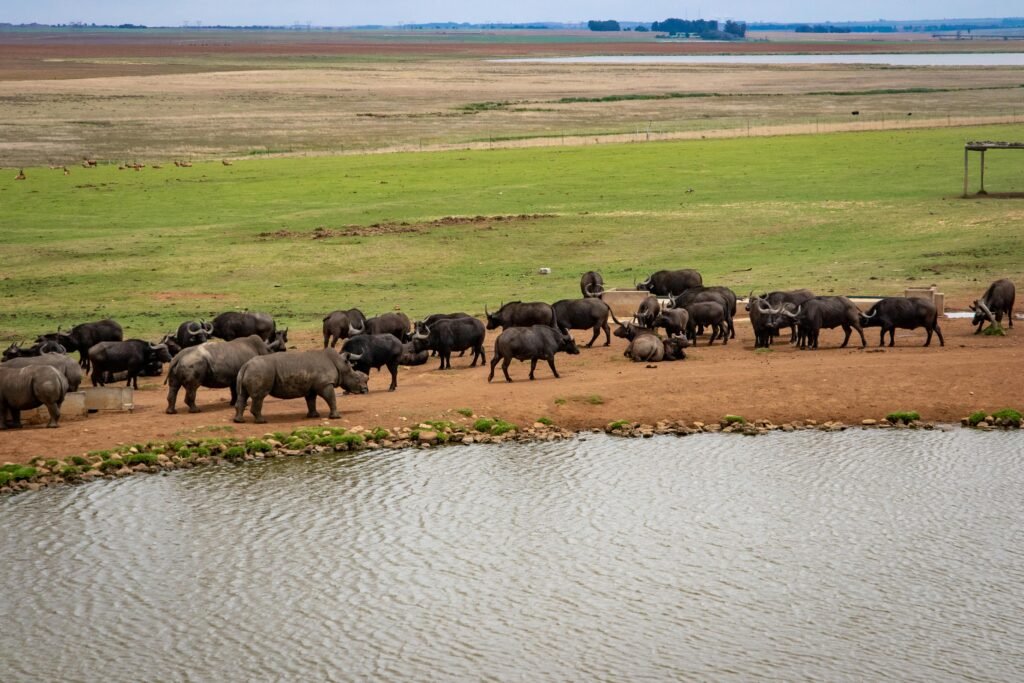
A peaceful scene of buffaloes gathered by a lakeside in a vast grassland.
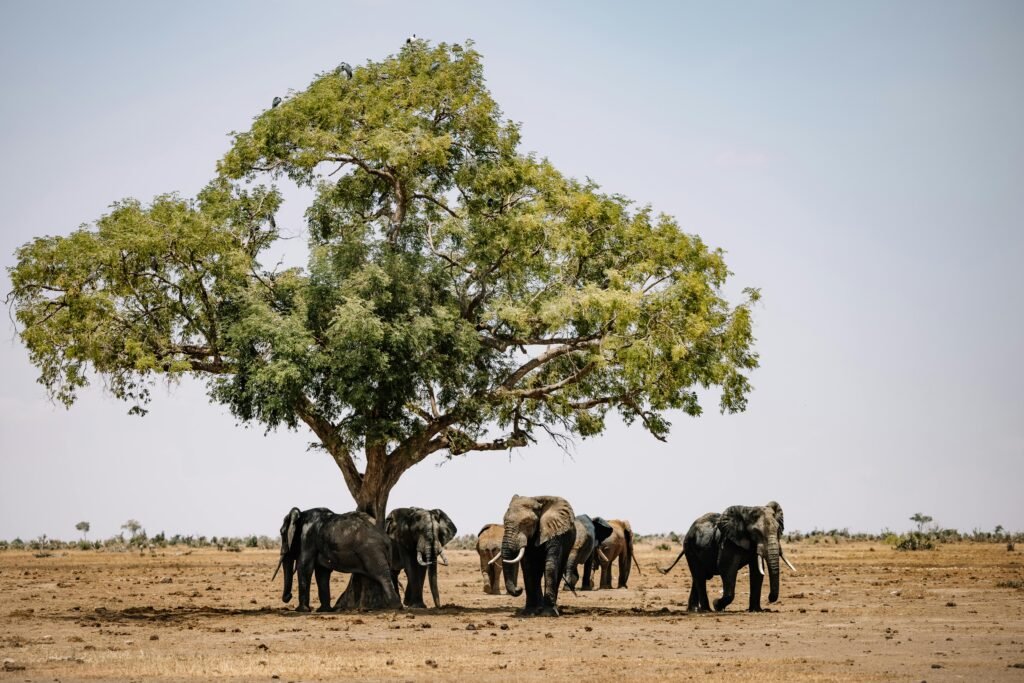
A herd of African elephants standing under a large tree in the wild, showcasing nature at its best.

BEST TIME TO VISIT

The Ngorongoro Crater is year-round attraction but can become quite busy during the high season from June to October.Sweeping grasslands join the Ngorongoro Conservation Area and the Serengeti. As such, it forms part of the annual migratory route of hundreds of thousands of wildebeests, zebras, antelopes and their predators who come to graze and calve between December and March.